EN
EN
Understanding Blast Chiller Capacity: Matching GN Pan Volume to Daily Production Needs
Calculating Daily Food Load Using GN Pan Equivalents and Peak Hour Demand
Getting the right size blast chiller starts with figuring out how much food gets produced each day in terms of GN pans, which is basically what everyone in catering uses to measure volume. First thing to check? What's the busiest time at your establishment? Let's say someone serves around 120 plates when things get hectic, and each plate needs about 800 grams of stuff that has already been chilled. That adds up to roughly 96 kilograms worth of product needing rapid cooling in an hour. Most regular sized GN pans can take about seven kilograms, so we're talking somewhere near fourteen pans worth of food every batch. Now multiply that by however many times per day these chilling sessions happen (three times would mean forty-two pans altogether). This gives us a baseline idea of what kind of capacity our equipment actually needs just to handle those busy spells without letting down on temperature control or risking food spoilage issues.
Why Accurate Load Estimation Prevents Underperformance or Energy Waste
If a blast chiller is oversized by around 20%, it can actually boost yearly energy use by about 15%. On the flip side, going too small creates serious problems like partial chilling that violates food safety standards set by HACCP guidelines according to Food Service Tech Report last year. Getting the right size matters because proper chillers bring temperatures down from 70 degrees Celsius to 3 degrees within 90 minutes max. This not only puts less stress on compressors which means longer lasting equipment, but also saves small catering businesses over seven hundred forty dollars each year on their power bills. What really counts though is matching the chiller capacity with what's actually needed for standard GN pans. When this happens, restaurants avoid losing nearly twenty thousand dollars annually due to spoiled food, having to redo meals, or scrambling to cool things down properly at the last minute.
Space-Smart Blast Chiller Options for Compact Catering Kitchens
Countertop and Under-Counter Blast Chillers: Ideal Footprint and Installation Flexibility
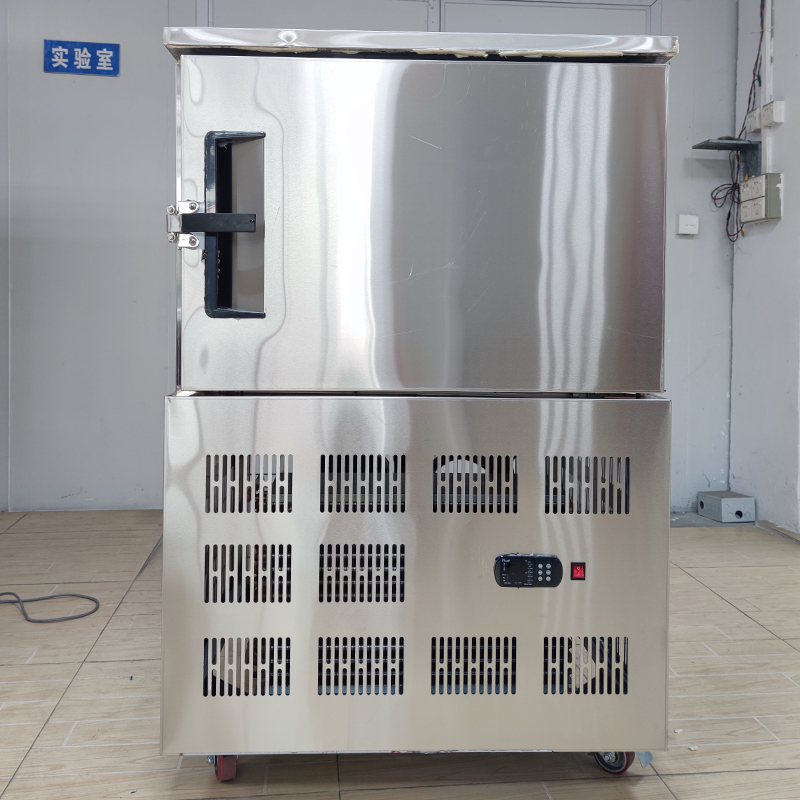
Small kitchens, especially those below 150 square feet like food trucks and pop-up restaurants, benefit greatly from countertop or under-counter blast chillers that make good use of vertical space while still meeting food safety standards. Most of these compact chillers can handle between three to six GN pans and will fit either underneath regular work surfaces or on specially reinforced countertops, usually needing about 24 inches of depth at most. The newer models cool food completely within around ninety minutes and cut down on electricity usage by roughly thirty percent when compared to bigger units according to recent research published in Food Safety Journal (2023). What makes them so popular? They don't require any changes to existing kitchen structures, they're easy to move around for special events, and many come with dual voltage options (120V/240V) which means operators can set them up almost anywhere regardless of local power requirements.
When to Choose Reach-In vs. Roll-In Configurations in Low-Volume Settings
Reach-in blast chillers are optimal for operations producing ≤50 meals daily, offering front-access convenience and capacities under 15 cu. ft. Roll-in units become operationally justified when weekly production exceeds 200 meals—especially where wheeled rack loading improves throughput. The decision hinges on physical constraints and labor efficiency:
| Feature | Reach-In (≤10 GN pans) | Roll-In (15–30 GN pans) |
|---|---|---|
| Space Needed | 36" clearance | 60"+ aisle width |
| Loading Effort | Manual pan handling | Cart-rolling system |
| Best For | À la carte kitchens | Batch-catered events |
Operations with ≤8 staff typically find reach-in models more ergonomic and practical; roll-in configurations prevent bottlenecks during high-volume periods like wedding receptions. Properly matched configurations reduce peak-service labor time by 22% (Hospitality Trends Report 2023).
Cost-Efficiency and Operational Reality: Why Right-Sizing a Blast Chiller Matters Most
The Hidden Costs of Over-Sizing: Energy, Maintenance, and Space Trade-Offs
When a blast chiller is too big for the job, it creates all sorts of problems down the line. The equipment runs at partial load most of the time, which means it keeps turning on and off repeatedly. According to some studies from Refrigeration Efficiency in 2023, this kind of operation actually increases energy consumption by around 30%. Plus, the constant start-stop cycle wears out compressors and fans much faster than normal, leading to maintenance needs that go up about 40%. And let's not forget the physical space issue either. Oversized chillers take up precious kitchen area that could be used for food preparation, causing real headaches when staff need to work around them during busy periods. Getting the right size chiller for the actual workload makes sense both financially and operationally. It cuts those unnecessary expenses without compromising food safety standards or making operations less flexible when things get hectic.
Scalability Considerations: Can a 3–6 GN Blast Chiller Support Future Growth?
The sweet spot for most restaurants lies somewhere between 3 and 6 GN units. These setups work well for places making around 200 meals a day but still leave room when business starts picking up. The modular rack systems give operators about 20 to 30 percent extra capacity before they need to spend money on bigger equipment. When thinking about whether to scale up, restaurant owners should keep an eye on how many GN pans go through during their busiest hours each month and watch those annual numbers over time. Looking at actual usage data helps smaller businesses wait longer before spending cash on new gear. Instead of buying everything upfront, they can grow gradually as customer demand proves itself sustainable, which makes financial sense in the long run.
FAQ
Why is it important to right-size a blast chiller?
Right-sizing a blast chiller is essential to avoid unnecessary energy consumption and maintenance issues. An oversized chiller can lead to significant energy waste while undersized units can result in partial chilling, violating food safety standards.
What should I consider when choosing a blast chiller for a small kitchen?
For small kitchens, countertop or under-counter blast chillers provide the best use of space, fitting within existing setups without needing structural changes. They offer energy efficiency and flexibility, crucial for compact areas like food trucks or pop-up restaurants.
How do reach-in and roll-in configurations differ in blast chillers?
Reach-in units are better for low-volume settings with space limitations while roll-in configurations are suited for higher volume production, providing easier handling with wheeled rack systems.
Can a 3–6 GN blast chiller handle future business growth?
Yes, these setups accommodate current demands and offer 20-30% additional capacity, allowing restaurants to gradually scale up as business grows, making them cost-effective for future expansion.