EN
EN
Determine Your Exact Ice Production Needs by Business Model
Calculate Daily Ice Demand Based on Beverage Volume and Service Pace
To figure out how much ice you need day to day, start looking at what drinks people actually order. Most cocktails will need around 1.5 to 2 pounds of ice per glass, whereas those popular iced coffees generally take about half that amount, somewhere between 0.7 and 1 pound. Take these rough estimates and multiply them against your typical daily sales numbers for each drink category. That gives a basic starting point. But don't forget about busy times when demand spikes dramatically. During those hectic afternoon hours, ice usage often jumps anywhere from 60 to 80 percent above normal levels. For instance, many cafes see their highest traffic in the late morning rush. Throw in an extra 15 to 20 percent just to cover emergencies or when machines break down unexpectedly. Following this approach helps maintain consistent ice availability without buying way too much upfront.
Industry-Specific Benchmarks: Coffee Shops, Bars, Juice Bars, and Mobile Vendors
| Business Type | Daily Ice Needs | Key Usage Patterns | Peak Demand Factor |
|---|---|---|---|
| Coffee Shops | 50–70 lbs | Iced drinks dominate summer menu | 2.1x baseline |
| Cocktail Bars | 100–150 lbs | High ice-to-alcohol ratios | 2.5x baseline |
| Juice/Smoothie Bars | 80–120 lbs | Blended beverages require more | 1.8x baseline |
| Mobile Vendors | 30–50 lbs | Space-limited storage | 3.0x baseline |
The numbers we see actually come from what happens day to day in businesses, not some made-up standards. Take coffee shops for instance, they really care about getting that clear, slow melting ice because it makes all the difference in their cold brews. Bars tend to go through most of their ice supply right around happy hour time, roughly 5 to 9 at night. Juice bars have completely different needs since they need those little nuggets of ice to blend properly without turning everything into slush. Mobile food trucks face their own challenges needing small but powerful machines that can keep up with quick service windows throughout the day. Looking at actual sales records is essential though. If there's a swing of about plus or minus twenty percent compared to these averages, it probably means the standard equipment just won't cut it and something customized will be necessary instead.
Match Ice Type and Shape to Beverage Quality and Customer Experience
Crescent Cube, Cubelet, and Top Hat Ice: Clarity, Dilution Control, and Visual Appeal
Crescent shaped ice cubes, small cubelets, and those distinctive top hat pieces offer better density, clearer appearance, and slower melting properties that really matter for high quality drinks. The reason these shapes work so well is because they have less surface area relative to their volume, which means less water gets into the drink over time. Spirits and cocktails stay tasting better this way. Take top hat ice as an example it can keep drinks cold about 30 percent longer than regular cubes since there's just not as much contact with the glass. That makes all the difference when someone wants to enjoy a drink slowly without it getting watered down too fast. Plus, the clean look of clear, smooth ice adds to the overall experience. Many upscale bars and specialty coffee spots know this trick well. When customers see that beautiful ice sitting in their drink, it tells them they're getting something special worth paying extra for.
Flake, Gourmet Sphere, and Nugget Ice: Strategic Use in Craft Cocktails and Premium Cold Brew
Specialized ice types serve distinct functional roles:
- Flake ice chills cold brew rapidly without over-diluting—critical for high-volume juice bars
- Gourmet spheres melt uniformly in aged whiskies and cognacs, enhancing mouthfeel and aroma release
- Nugget ice absorbs syrups and integrates seamlessly into slushies and blended drinks, improving texture consistency
Operators who align ice format with beverage profile report a 22% increase in repeat orders—evidence that thoughtful ice selection elevates both sensory experience and commercial performance.
Select the Right Ice Freezer Configuration for Space, Ventilation, and Workflow
Undercounter, Modular, and Combination Ice Freezer Units—Pros, Cons, and Real-World Fit
Configuration must match physical constraints and service rhythm.
- Undercounter units conserve floor space and suit small cafes or satellite locations with steady, moderate demand—but offer limited storage and less flexibility for growth.
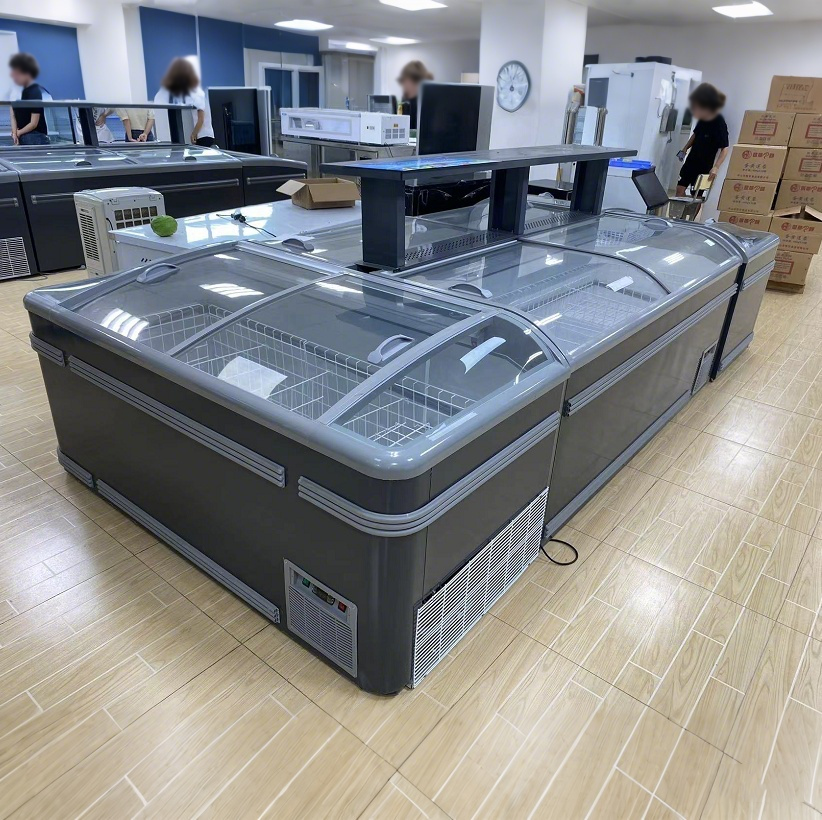
- Modular systems (separate maker + bin) support scalability and high-volume output, ideal for busy bars—yet demand significant floor space and strict ventilation clearance (minimum 6 inches on all sides) to avoid efficiency loss.
- Combination units integrate production and storage, streamlining workflow for mobile vendors or compact juice bars—though full-system downtime may occur during repairs.
Prioritize stable, level flooring; unobstructed airflow; and easy access for maintenance. Poor placement—especially inadequate exhaust clearance—can raise energy use by 15–20% due to heat recirculation. Always measure not just footprint, but full service envelope—including clearance zones—before selecting.
Prioritize Energy Efficiency and Long-Term Operational Reliability
ENERGY STAR Certification, Air-Cooled vs. Remote Condensers, and kWh/100 lbs Cost Analysis
Energy efficiency is a direct lever on profitability—especially for units operating continuously. ENERGY STAR-certified models cut electricity use by 10–15% versus standard units, thanks to high-efficiency compressors, optimized evaporator design, and advanced insulation. When evaluating condenser options:
- Air-cooled condensers are cost-effective upfront but sensitive to ambient heat and require generous ventilation—making them less reliable in cramped or warm kitchens.
- Remote condensers, though pricier initially, separate heat-generating components from the main unit, enabling installation in tight spaces while maintaining consistent output and reducing long-term service risk.
A kWh/100 lbs analysis reveals true operational cost. For example:
| Production Volume | Rate/kWh | Annual Cost (Standard Unit) | Annual Savings (ENERGY STAR) |
|---|---|---|---|
| 500 lbs/day | $0.14 | $3,190 | $320–$480 |
Beyond energy savings, prioritize models with automated diagnostics and stainless-steel construction—proven to extend service life by 30–40% and reduce unscheduled downtime, turning efficiency into compounding reliability.
Frequently Asked Questions
What factors determine the daily ice needs of my business?
Daily ice needs are determined by the types of drinks you serve, their individual ice requirements, typical daily sales numbers, and peak demand periods. Also consider potential emergencies or equipment failures.
How does the type of ice affect beverage quality?
Different ice types offer distinct benefits, such as clarity and slow melting properties, which help maintain the taste and visual appeal of the beverage. Specialized ice can enhance texture and consistency in various drinks.
What should I consider when choosing an ice freezer unit?
Consider your available space, workflow, and ventilation needs. Choose between undercounter, modular, or combination units based on your business size, demand patterns, and space limitations.
How can I improve my ice machine's energy efficiency?
Choose ENERGY STAR-certified models, consider air-cooled versus remote condensers depending on your space, and conduct a kWh/100 lbs cost analysis to determine the most cost-effective options.
Table of Contents
- Determine Your Exact Ice Production Needs by Business Model
- Match Ice Type and Shape to Beverage Quality and Customer Experience
- Select the Right Ice Freezer Configuration for Space, Ventilation, and Workflow
- Prioritize Energy Efficiency and Long-Term Operational Reliability
- Frequently Asked Questions