EN
EN

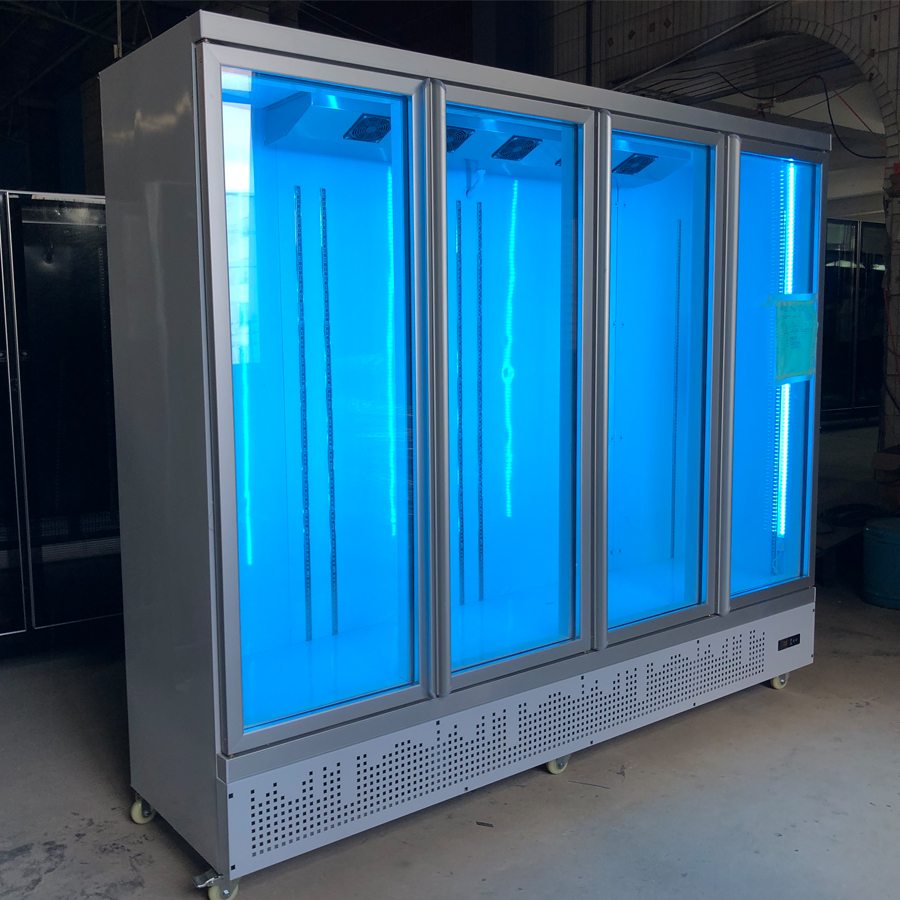
Robust Construction for Long-Term Ice Merchandiser Reliability
Stainless Steel vs. Powder-Coated Steel: Corrosion Resistance in High-Humidity Environments
Commercial spaces such as fish markets and beachside bars put ice merchandisers through their paces daily, constantly battling moisture that speeds up rusting problems. Type 304 stainless steel beats regular powder-coated options because it naturally contains chromium which creates this protective oxide layer that actually fixes itself over time against rust spots and pits. Even if someone scratches the surface, the protection stays effective whereas with powder coatings, any impact damages the polymer finish and lets corrosion start creeping underneath where nobody can see it happening. Powder coating does save money initially and allows for colorful designs, but real world tests show stainless steel lasts about 40% longer in places where humidity stays above 70%, according to the Material Durability Report from last year. So for businesses near coastlines or those needing frequent cleaning, paying extra for stainless steel makes financial sense in the long run despite the higher initial investment.
Reinforced Cabinet Frames and Impact-Resistant Door Panels
Durability isn't just about what's on the outside. Most heavy duty ice display units actually rely on substantial steel or aluminum frames with cross bracing to hold up against all sorts of stress during shipping or when bumped accidentally. Take a look at those doors - they're built with tough polycarbonate panels that can withstand roughly eight times more force before breaking compared to regular glass. And those long stainless steel hinges? They spread out the weight properly so doors don't droop over time. This matters a lot in busy places where shopping carts constantly bump into displays. When doors stay sealed properly after these incidents, it saves energy and keeps ice from melting faster than it should. Merchants really appreciate how these sturdy construction features keep their equipment running smoothly even in hectic spots like sports arena food courts or hotel lobby gift shops where foot traffic never slows down.
Precision Temperature Control to Preserve Ice Quality
Dual-Zone Cooling and Adaptive Defrost Cycles
Modern ice merchandising units keep things running smoothly thanks to their dual zone temperature control systems. These machines separate storage areas so cubes stay at around -1 degree Celsius (30 degrees Fahrenheit) while flake ice remains colder at about -4 degrees Celsius (25 degrees Fahrenheit). The smart defrost feature kicks in only when frost builds up past 3 millimeters thick, which saves roughly 18 percent on energy costs compared to older models that defrosted on fixed schedules according to ASHRAE research from last year. This approach stops those annoying temperature fluctuations that waste ice, actually reducing melt losses by nearly a quarter. What's more important for bars and restaurants? The ice stays hard enough throughout those long 12 hour display times, meaning customers get quality drinks even when business is booming at nightclubs or busy sports bars.
IoT-Enabled Real-Time Monitoring and Remote Cloud Management
Today's systems come equipped with IoT sensors that monitor what's going on inside about every half minute and send all that info up to safe cloud servers. When temperatures go outside the normal range by even half a degree Celsius, facility staff get immediate warnings so they can fix things before the ice starts getting bad. The remote diagnostic tools are pretty smart too. They figure out when stuff like condenser coils need cleaning around 92 times out of 100, which cuts down unexpected breakdowns by roughly 40 percent according to Food Safety Tech Report last year. These cloud connected systems automatically switch to power saving settings during slow periods, making it easier for companies to follow EPA rules about refrigerants and save money at the same time. With this kind of constant monitoring, there's no need for someone to physically check everything all the time. Ice stays good throughout the whole process from being stored to when customers actually take it home.
High-Throughput, Low-Maintenance Ice Storage and Dispensing
Auger-Driven Vertical Dispensing: Jam Resistance and Consistent Flow
Vertical dispensing systems powered by augers solve those annoying ice jam problems while keeping output steady something commercial ice vendors need when business picks up. Gravity does most of the work here, pulling ice down toward the auger where spiral blades move it along without breaking the cubes apart. These systems have just one moving part which means fewer places for things to go wrong and less chance of ice getting stuck together. Tests show they can handle over 1500 pounds of ice each day and require about 40% less maintenance than their horizontal counterparts according to field reports. The whole system stays sealed so there's no risk of germs getting in or melt water messing with the ice quality as it comes out. And because the space between the auger and wall is carefully adjusted, it works well with different sized ice cubes too maintaining good flow rates even when customers are grabbing ice nonstop during busy hours.
Energy Efficiency and Regulatory Compliance for Commercial Ice Merchandisers
When shopping around, commercial buyers usually focus on two main things: cutting down on running expenses and staying compliant with all those regulations they have to follow. Ice merchandisers that carry the ENERGY STAR certification actually cut back on power usage between 15% to 25% compared to regular models. That adds up to about $740 saved each year for every single unit according to data from the Department of Energy in 2023. For businesses looking at FEMP standards, Tier 2 compliance means even better performance than what's required. These units go beyond basic efficiency goals by roughly 10%, thanks to smarter harvest cycles and defrost systems that adjust automatically based on conditions. Some important characteristics to look for would be...
- Automatic Power Management: Scheduled shutoffs during off-peak hours lower idle energy drain by 30%
- Refrigerant Regulations: Full compliance with EPA SNAP guidelines for low-GWP (Global Warming Potential) refrigerants
- Insulation Standards: 4-inch polyurethane foam cabinets maintain stable internal temperatures with 40% less compressor runtime
Dual-certification (ENERGY STAR + FEMP) future-proofs operations against evolving state and federal mandates while significantly reducing total cost of ownership.
FAQ
Why is stainless steel preferred over powder-coated steel in high-humidity environments?
Stainless steel is preferred because it contains chromium, which forms a protective oxide layer that prevents rusting and self-repairs itself over time, unlike powder-coated steel that can allow corrosion if damaged.
What are the advantages of dual-zone cooling in ice merchandisers?
Dual-zone cooling allows different storage temperatures, ensuring cubes stay at a specific temperature while flake ice remains colder, reducing temperature fluctuations and minimizing ice melt losses.
How do IoT sensors benefit ice merchandisers?
IoT sensors enable real-time monitoring and send alerts when temperature discrepancies are detected, helping prevent ice quality deterioration and reducing unexpected equipment breakdowns.